A recommendation is a unit of analysis, not a unit of action. The work that turns one into the other is where enterprise operations
still lose most of their time.
AI can already tell operations teams what is wrong. The harder part is everything between knowing and doing. Skylar is closing that gap through guided action: recommendations grounded in live operational context, reviewed by the right owner, and connected to governed execution.
In many post-incident reviews, the surprising moment is not when the team finally understood the problem. It is when they realize how long the organization waited after it already knew enough to act. Yet a long interval followed before anyone changed anything in production.
More often, it appears as waiting: waiting for ownership, waiting for dependency validation, waiting for change approval, waiting for the right team to confirm risk, and waiting for stakeholders to understand what action will mean for the business.
The priority is no longer simply faster diagnosis. It is guided action: carrying operational context, ownership, and approval forward so recommendations can become executable work.
From Recommendations to Guided Action
Guided action goes beyond a recommendation. It gives teams the context to assess service impact, identifies who can authorize the next step, and connects approved work to an execution path.
Enterprise operations do not execute recommendations on their own. Teams must turn them into authorized, guided action.
A recommendation to restart a service, scale capacity, reroute traffic, suppress an event, or trigger a remediation workflow may be analytically correct. But before it becomes action, the organization still has to answer practical questions. What business service depends on this component? Will the proposed action affect customers? Is there an active maintenance window? Has a recent change altered the environment? Who owns the system? Who has authority to proceed? What happens if the action fails?
It does not automatically resolve the operational work required to act on it.
As a result, many organizations are entering a new kind of bottleneck. Recommendations are moving at machine speed into operating models that still depend on human coordination, manual context gathering, fragmented tools, and unclear accountability. The recommendation may be ready. The organization may not be.
Where Recommendations Stall
The first place recommendations stall is dependency validation. A system may identify the likely action, but teams still need to understand what else could be affected. In hybrid environments, a single component may support multiple applications, services, customer experiences, or downstream integrations. Acting without that context can resolve one issue while creating another.
The second point of friction is change governance. Teams need to understand risk, document the proposed action, confirm rollback options, and determine whether business approval is required. AI may explain why an action is technically appropriate, but the organization still has to determine whether it is operationally acceptable.
The third is escalation ownership. Major incidents rarely map cleanly to a single team. A recommendation may involve infrastructure, applications, networking, cloud, security, and service management at the same time. When ownership is unclear, the delay is often not caused by disagreement over the recommendation. It is caused by uncertainty over who is accountable for the next decision.
The fourth is stakeholder communication. Customer-facing services, executive stakeholders, support teams, and adjacent technical groups need to understand what is happening, why action is being taken, what risk is involved, and what impact to expect.
Together, these handoffs reveal the real challenge. It loses time because insight has to survive the operational process required to turn it into coordinated action.
Context Is the Difference Between Analysis and Action
At every handoff, context has to travel with the recommendation. If it does not, the next team has to rebuild confidence from the beginning. They ask whether the proposed action is still safe. An extended conversation around an investigation can help preserve the questions, evidence, and decisions that teams develop together, so the next participant does not have to start over.
The problem is that the work often happens manually, repeatedly, and under pressure.
That is why the answer is not simply more AI-generated recommendations. Organizations need a shared operational view that allows the context behind a recommendation to remain visible, current, and trusted as work moves across teams and systems.
Insight becomes guided action when a recommendation is grounded in the live environment, connected to service impact and change history, reviewed within governance boundaries, and ready for an authorized owner to execute.
With that foundation, recommendations can move into guided, safer action instead of becoming another item awaiting interpretation.
How ScienceLogic Helps Close the Gap
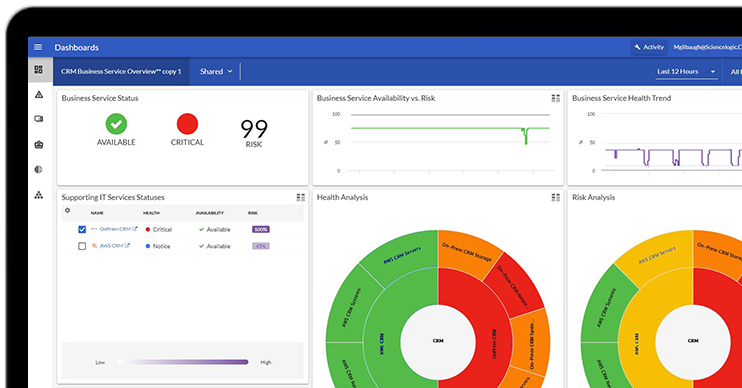
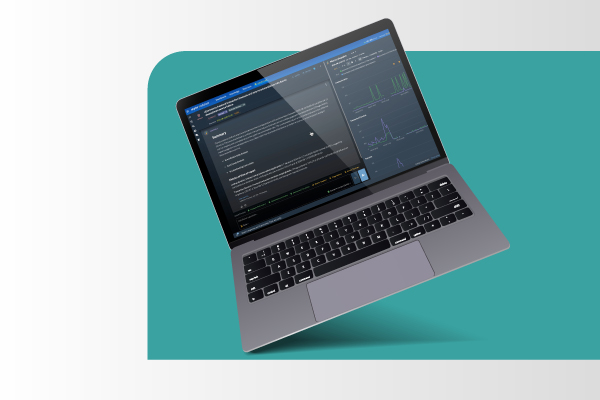
ScienceLogic brings context and guidance together to narrow the gap between knowing and doing. Skylar One provides service-aware observability, Skylar AI and Skylar Advisor help operators investigate and assess recommended next steps, and Skylar Automation supports governed workflows for approved execution. The aim is a connected path toward guided action, not a claim that every recommendation can already be executed automatically.
Skylar Advisor draws on telemetry, tickets, documentation, and extended investigation conversations to make guidance easier to inspect and carry across handoffs. In the evolving workflow, the context teams establish together can also inform which repetitive information-gathering steps are candidates for future automation. Automated execution remains subject to appropriate approvals, policy, and available integrations.
It is helping teams preserve the context needed to act.
When a recommendation is connected to service impact, dependency relationships, change activity, historical incidents, and operational knowledge, teams can evaluate it more quickly and with greater confidence. They spend less time debating what is true and more time deciding what should happen next. Those accumulated conversations could, over time, expose recurring investigation steps and workflows that teams can standardize and automate. The objective is to make selected, well-governed actions increasingly routine, not to suggest that Skylar Advisor already learns and automates those steps on its own.
From Faster Insight to Guided Action
Faster analysis has value, but the larger opportunity is shortening the path from a credible recommendation to guided action. That means preserving evidence, clarifying ownership, and making approved next steps actionable without sacrificing control.
They will be the ones with the strongest operational foundation around that guidance: shared context, clear ownership, service awareness, governance, and the ability to coordinate action across teams.
The next stage of AI-driven operations is not intelligence that stops at analysis. It is guided action that maintains context and trust from recommendation through authorized execution.
The next question is what kind of system makes that possible. If a system of insight helps teams understand what is happening, what does it take to build a system of action?