MTTD, MTTA, and MTTR help teams understand where time is lost across the incident lifecycle.
(Not sure what the difference between these terms is? Read our guide to incident management metrics.)
But improving those metrics requires more than asking people to work faster.
IT operations teams need observability to understand what is happening, service context to assess its impact, and trusted guidance or automation to act with confidence.
That becomes increasingly difficult as IT environments grow more complex.
Why Modern IT Complexity Slows Incident Response
Modern IT environments span physical infrastructure, virtual machines, cloud platforms, applications, containers, networks, business services, and distributed locations.
A single service may depend on technologies managed by several teams and monitored through multiple tools.
An isolated alert rarely provides enough context to understand an incident or its service impact. An alert may indicate that a device or application is experiencing a problem, but it may not explain:
- Which business service depends on the affected technology
- Which users or locations may be impacted
- Whether related events share a common cause
- What changed before the incident began
- Which team should respond
- Which remediation steps have worked previously
As monitoring tools and data sources multiply, operators may spend more time collecting and reconciling information than resolving the issue.
This gap is where decision latency is introduced. It extends the path from signal to service impact, probable cause, ownership, and action, affecting MTTD, MTTA, and every variation of MTTR.
The goal is not simply to process alerts faster. It is to reduce the time between detection, understanding, and action so teams can identify what matters, understand the impact, and respond with confidence.
From Alert Overload to Contextual, AI-Guided Operations
Modern observability and artificial intelligence for IT operations, or AIOps, can help organizations improve incident metrics by connecting telemetry, service context, guidance, and action.
Detect Issues Earlier
Unified observability helps teams understand infrastructure, applications, services, devices, and locations across hybrid and multicloud environments.
Continuous discovery, event correlation, relationship mapping, and service context can surface issues earlier and reduce the blind spots that increase MTTD.
Prioritize What Matters
Not every alert requires the same response.
Service, location, topology, and relationship context help operators understand where an issue is occurring, what depends on the affected technology, and which users or business services may be impacted.
Teams can then prioritize incidents based on service and business impact rather than alert severity alone.
Accelerate Investigation
Operators often lose time moving among monitoring tools, service management platforms, tickets, documentation, and runbooks.
AI-guided operations can bring together telemetry, historical tickets, operational knowledge, and service relationships.
This context can help teams understand what is happening, why it matters, and what to investigate next.
The most useful guidance is grounded in the organization’s own environment and includes supporting evidence operators can review before acting.
Improve Handoffs and Response
Integrations with IT service management and collaboration platforms can enrich incidents automatically with diagnostic and service-impact information.
Providing better context at the point of handoff helps the correct team begin work sooner. It can also reduce the back-and-forth communication that increases MTTA and MTTR.
Automate Repeatable Work
Once teams establish a reliable process, automation can manage repetitive steps such as:
- Creating and enriching incidents
- Routing work to the appropriate team
- Collecting diagnostic information
- Updating tickets and stakeholders
- Triggering approved remediation workflows
- Documenting completed actions
Automation should execute repeatable work within defined policy boundaries while preserving visibility into what was done, why it was done, and whether the expected outcome was achieved.
How to Improve MTTD, MTTA, and MTTR
Different incident metrics are affected by different sources of delay.
| Metric |
Common Sources of Delay |
Areas to Improve |
| MTTD |
Monitoring gaps, fragmented tools, missing dependencies, incomplete coverage |
Unified observability, continuous discovery, event correlation, and service and location context |
| MTTA |
Alert noise, unclear ownership, manual routing, missing impact information |
Impact-based prioritization, intelligent routing, ITSM integration, and incident enrichment |
| MTTR |
Manual investigation, incomplete topology, knowledge silos, repetitive tasks |
Probable-cause context, AI-guided investigation, operational knowledge, and workflow automation |
| MTBF and MTBSI |
Temporary workarounds, weak problem management, limited post-incident learning |
Recurring issue analysis, validated remediation, trend identification, and reusable knowledge |
The objective is not simply to produce better numbers. It is to reduce service impact and improve operational reliability.
How ScienceLogic Helps Reduce Incident Impact
The ScienceLogic AI Platform combines observability, AI-guided insight, and intelligent automation across complex hybrid IT environments.
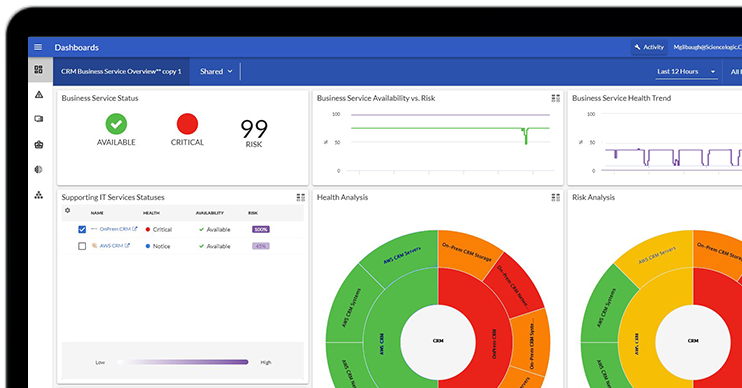
Skylar One provides unified observability across infrastructure, applications, services, devices, and locations. It connects operational data with topology and relationship context, helping teams understand what is happening, determine what may be affected, and focus investigations on the issues that matter most.
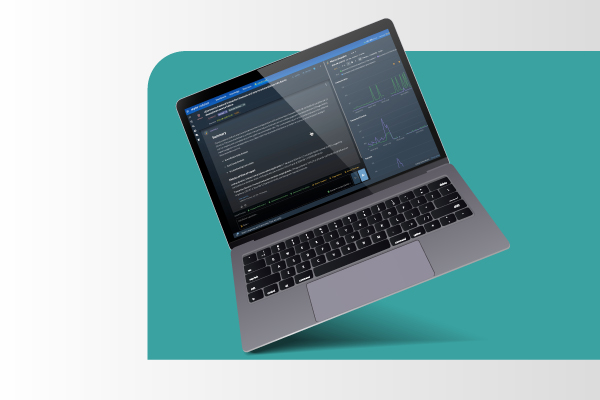
Skylar Advisor turns telemetry, tickets, documentation, and operational knowledge into prioritized, explainable guidance. Operators can review supporting evidence, understand recommended next steps, and apply institutional knowledge during troubleshooting.
Skylar Automation extends operational context into ITSM, collaboration, and other enterprise tools. It helps teams reduce manual handoffs, enrich incidents with actionable information, and orchestrate repeatable response workflows across the IT ecosystem.
Together, these capabilities help operations teams shorten the path from isolated signal to service impact, probable cause, trusted action, and verified resolution.
Observe what is happening. Understand why it matters. Act with greater speed and confidence.
Frequently Asked Questions
How does observability help reduce MTTR?
Observability brings together operational data, dependencies, topology, and service-impact information. This context can reduce the time operators spend collecting information and help them focus investigation and remediation efforts more quickly.
Is a lower MTTR always better?
A lower MTTR is generally positive, but it should not come at the expense of a complete and lasting resolution.
Teams should evaluate MTTR alongside recurrence, reliability, and recovery metrics to confirm that they are addressing the underlying problem rather than repeatedly applying temporary fixes.
Turn Incident Metrics Into Operational Improvements
Tracking incident metrics shows where teams lose time. Improving those metrics requires observability to detect issues earlier, service context to understand impact, and trusted guidance and automation to respond effectively.
The issue is not simply how quickly an incident can be closed. It is whether teams can identify what matters sooner, understand what is affected, restore services with confidence, verify recovery, and reduce the likelihood of recurrence.
See Skylar One in Action
Explore Skylar One in a ready-to-use environment with live data and realistic operational scenarios. See how unified observability, operational context, and AI-guided insights can help teams investigate issues and respond with greater speed and confidence. No setup or meeting is required.
Start your 14-day Skylar One test drive.