How to Reduce Risk During Critical Incidents with Verifiable Guidance
Why High Pressure Demands Intelligence You Can Trust
When a major incident strikes, every second becomes a decision point. Service degradations accelerate. Customers feel the impact. Revenue and reputation hang in the balance. In these moments, IT teams do not need abstractions or probabilistic guesses. They need guidance they can validate and decision paths they can explain with confidence long after the incident is resolved.
Hybrid environments are too complex for intuition, and the repercussions of an incorrect action are significant. Organizations require intelligence that reduces uncertainty, strengthens judgment, and supports consistent execution when conditions shift rapidly.
The Rising Risk Landscape for Operations Teams
Critical incidents reveal structural weaknesses within an IT estate. Hidden dependencies surface. Telemetry overwhelms human processing. Rooms fill with noise, conflicting inputs, and urgency.
The cost of a misstep is substantial. A single incorrect change can escalate an isolated issue into an extended outage. A misread signal can redirect teams away from the core problem. A missed dependency can prolong recovery and increase financial impact.
In this environment, risk is shaped not by the incident itself but by the quality of the intelligence directing each decision.
Why Teams Hesitate to Trust Traditional AI During Incidents
AI has raised expectations for faster, more accurate operations. Yet during real incidents, operators often hesitate. The concern is safety, not comfort.
Traditional AI breaks down because it:
- Provides answers without context
Teams cannot determine whether recommendations reflect current system
- Lacks transparency
Without insight into the reasoning, operators cannot justify outcomes or
assess potential consequences.
- Overlooks operational realities
Generic models fail to understand telemetry lineage, topology, business
impact, and institutional knowledge.
When conditions intensify, these gaps become unacceptable. Teams need intelligence grounded in actual system behavior and structured to support sound judgment.
What Verifiable Guidance Really Means
Verifiable guidance is defined by four characteristics:
- Grounded in high-fidelity data
Recommendations must reflect the true state of the environment.
- Explainable in reasoning
Operators need visibility into how conclusions were reached.
- Aligned to business impact
Severity must be tied to customer and revenue consequences, not
symptoms alone.
- Traceable for post-incident analysis
Teams must be able to articulate why an action was taken and what
informed it.
This level of rigor enables decisive action. Transparent, contextual intelligence produces disciplined responses during volatile situations.
How Skylar Advisor Reduces Risk Through Verifiable Guidance
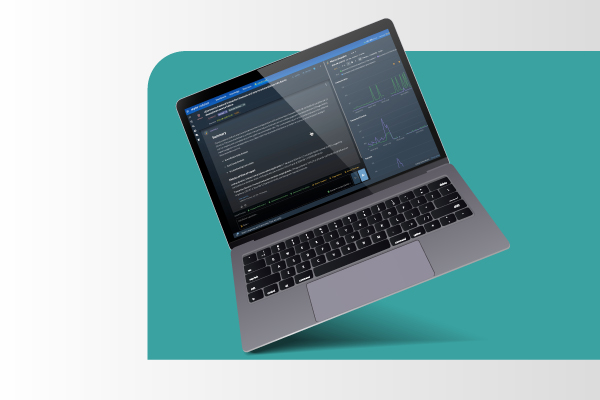
Skylar Advisor brings structure and clarity to the moments when uncertainty creates the most operational exposure. Its agentic AI engine interprets dependencies, correlates telemetry, understands historical patterns, and uncovers relationships that are often missed at speed.
Skylar Advisor reduces operational exposure by:
- Delivering recommendations based on real-time telemetry
- Explaining every conclusion through transparent reasoning
- Revealing downstream impacts on systems and business performance
- Highlighting likely root causes with corroborating evidence
- Providing guided steps supported by the data
This approach shifts decision-making from reactive to controlled. Operators move with clarity because each action is anchored in verified system behavior.
Turning High Pressure Into Informed Action
Imagine a service degradation affecting multiple application tiers. Logs spike. CPU patterns shift. Event storms create noise. Traditional AI might guess at probable causes or offer generic next steps.
Skylar Advisor correlates telemetry across components, identifies the root cause, maps the chain of impact, and guides the operator through validated actions. This shortens decision cycles, reduces uncertainty, and prevents choices that could worsen the situation.
Teams operate with steadier judgment when intelligence reflects reality. Clear, defensible guidance keeps focus on the actions that restore service.
Business Value: Risk Reduction That Protects Revenue and Reputation
Verifiable guidance delivers measurable outcomes:
- Reduced downtime through precise triage
- Lower operational exposure by avoiding incorrect remediation
- Improved SLA performance through consistent, evidence-based execution
- Stronger audit readiness with clear, reviewable decision paths
- Greater team confidence that improves response performance
- Organizations adopting this model see more consistent decisions, fewer escalations, and stronger alignment between engineering and leadership.
The impact extends beyond technical stability. Faster recovery, fewer errors, and dependable service differentiate companies competing in markets where reliability and accountability influence long-term value.
A Safer Path to the Future of Intelligent Operations
As AI becomes part of operational workflows, the question shifts from whether teams will use it to whether the intelligence guiding them can be reviewed, defended, and trusted within a mature operating model.
The future belongs to systems that elevate consistency and resilience. Skylar Advisor supports this evolution by transforming incident response into an evidence-driven workflow that strengthens operational maturity.
Organizations that prioritize verifiable guidance now will navigate complexity with stability as AI-driven operations become the norm. They build frameworks rooted in clarity and discipline, enabling confident performance in environments defined by constant change.
Want to reduce operational risk during your most critical incidents? Discover how Skylar Advisor delivers verifiable, explainable guidance that strengthens decision-making, protects revenue, and improves resilience across modern hybrid environments.