Co-author: Jared Hensle, Sr. Director, Product Marketing
Modern IT environments do not fail in neat, isolated ways. A network issue in one location can affect a business service somewhere else. A device alert may be the first sign of a larger dependency problem. And when teams are managing infrastructure across data centers, cloud, branches, campuses, and edge environments, the first challenge is often knowing where to look first.
The issue is not alert volume alone. It is the missing context between telemetry, service impact, probable cause, and action.
With the latest Kyoto release, Skylar One gives technical teams get stronger context across the environments they manage, including improvements in geographic visibility, business service management, topology, discovery, and digital experience monitoring. The goal is simple: help teams understand what is happening, which service and users it impacts, and should happen next.
See Location as Operational Context
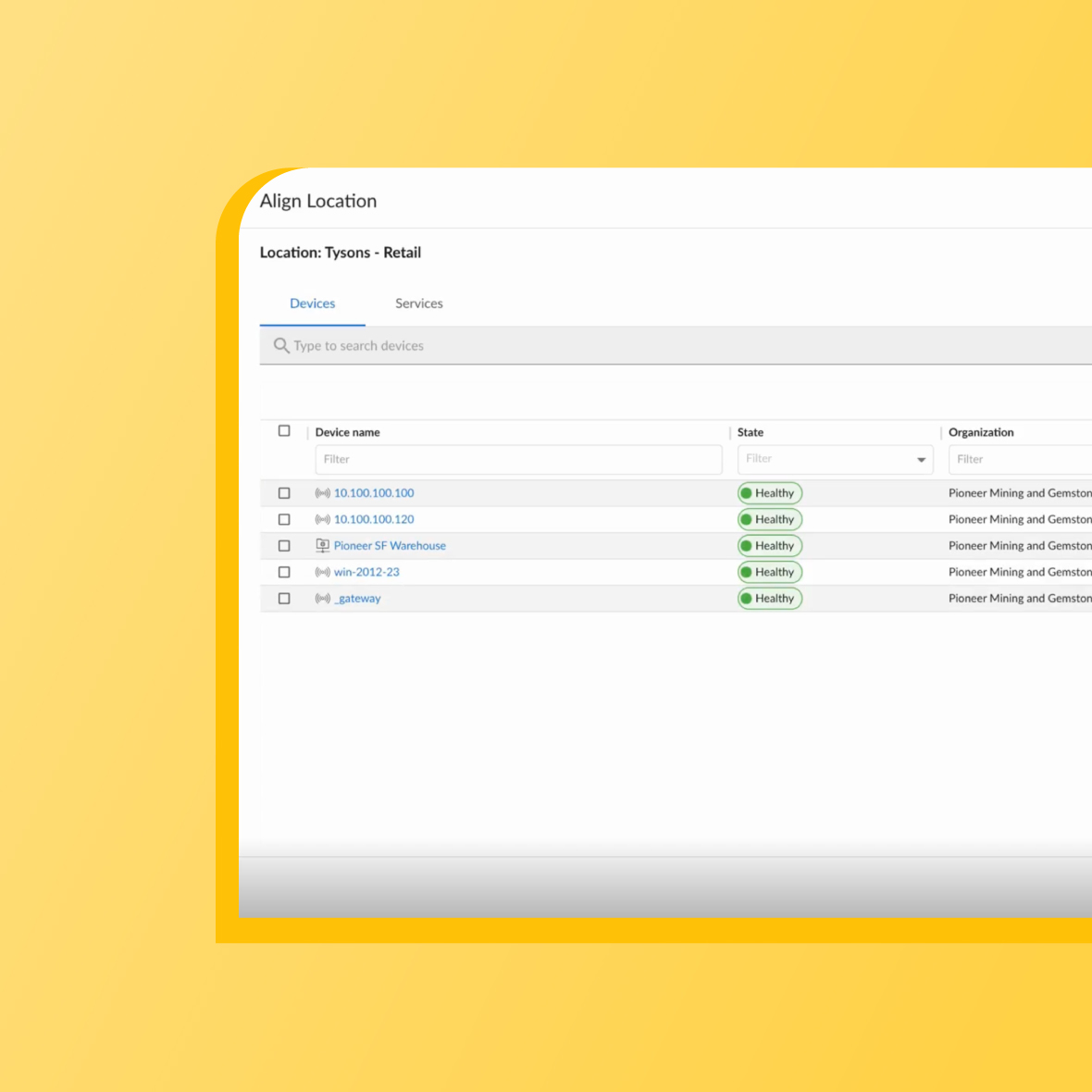
For distributed IT teams, location is operational context. An alert by itself only tells part of the story. Teams need to know whether that issue is tied to one site, multiple locations, a region, or a broader service footprint.
Enhanced geographic visibility in this release helps teams make that connection more quickly. For organizations managing branch offices, retail sites, campus networks, MSP customer environments, or other distributed infrastructure, Skylar One provides a more practical way to view health and impact across physical locations.
Instead of digging through alerts and manually connecting the dots, teams can better understand whether an issue is isolated or part of a larger pattern. That shortens triage, focuses escalations, and makes stakeholder communication more precise.
Understand Service Impact Faster
During an incident, technical teams are often asked a deceptively simple question during an incident: “What does this affect?”
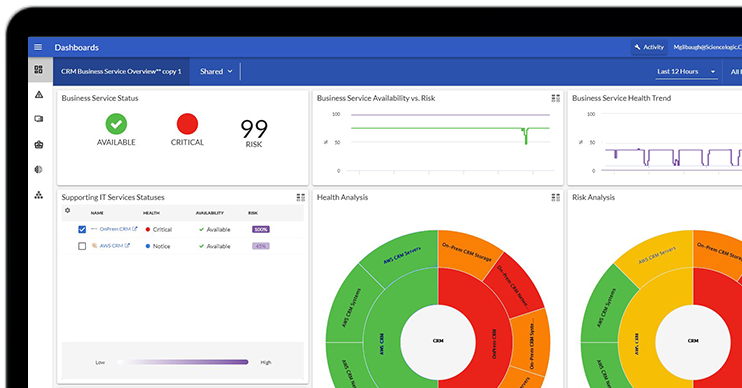
Answering that quickly is difficult when infrastructure, services, and dependencies are spread across different tools or mental maps. The business service enhancements in Kyoto help bring that context closer to the investigation.
Teams can better understand which services rely on specific infrastructure, which components may be contributing to an issue, and how a technical event could affect users, operations, or business workflows. That makes it easier to prioritize based on service impact, not alert severity alone.
For practitioners, the value is a clear investigation path, fewer manual steps, less guesswork, and a clearer path from symptom to root cause.
Strengthen Topology and Dependency Awareness
Topology is only useful when teams trust it. When relationships are incomplete or unclear, teams lose time validating connections, chasing symptoms, or relying on tribal knowledge.
This release continues to improve topology and relationship context, helping users better understand how systems, devices, and services are connected. That visibility is especially valuable during root cause analysis, where upstream and downstream dependencies often determine where the real problem lives and what may be affected next.
With stronger topology context, teams can investigate with greater confidence and reduce the time spent piecing together what changed, what is connected, and what may be affected.
Improve Discovery Across Changing Environments
IT estates change constantly. Devices move, services evolve, environments expand, and new dependencies appear. When discovery falls behind, blind spots start to creep into operations.
The discovery improvements in this release help teams maintain a more accurate view of the infrastructure Skylar One monitors. Better discovery supports more reliable relationship mapping, more accurate impact analysis, and stronger operational decisions.
For technical users, that means the ScienceLogic AI Platform becomes a stronger source of operational truth for the environment, not just a place to see alerts.
As environments change, discovery becomes part of decision quality. Teams can only trust impact analysis, topology, and remediation paths when the underlying inventory and relationships remain current.
Connect Infrastructure Health to Digital Experience
A technical issue is not always meaningful on its own. What matters is whether it affects users, services, or the experience the business is trying to deliver.
Digital experience monitoring enhancements help teams connect infrastructure health with user-facing symptoms. That makes it easier to understand whether a technical event is simply noise, and early warning signal, or something that may affect employee productivity, customer experience, or service performance.
This is where the release becomes especially useful for teams trying to operate more proactively. It helps them move beyond “what is broken?” and get closer to “who or what is impacted, and how quickly we should act?”
Without experience context, teams can over-prioritize low-impact noise or miss early signs of service degradation. With experience context, infrastructure signals become more useful for preventing user-visible disruption.
Why Technical Teams Should Care
This release gives IT operations teams more of the context they need to work efficiently in complex environments.
Key areas of value include:
- Enhanced geographic visibility across distributed locations
- Business service management enhancements that clarify service impact
- Improved topology and dependency context for root cause analysis
- Discovery improvements that reduce blind spots as environments change
- Digital experience monitoring enhancements that connect technical health to user impact
- Better prioritization based on operational and service relevance
Together, these improvements help teams troubleshoot with more confidence, reduce time spent manually connecting dependencies, and explain impact in a way that both technical and business stakeholders can understand and trust.
The common thread is context. Kyoto helps reduce the gap between detection, understanding, and action so teams can prioritize work based on operational and service relevance.
The Bottom Line
Technical teams do not need another layer of noise. They need decision-ready context, service awareness, and faster ways to understand what matters.
The Kyoto release helps make Skylar One more useful in the moments that count: when teams are investigating an issue, assessing service impact, identifying dependencies, or communicating what is happening across the environment.
For teams evaluating the release, the practical question is where context is currently lost inside the incident lifecycle. Where do operators switch tools to understand location, service impact, dependency paths, or user experience? Where does escalation become the default because the evidence is incomplete? Those are the moments Kyoto is designed to improve.
Upgrade today to Skylar One v12.5.20 Kyoto so teams can better prioritize work based on operational and service relevance.