ScienceLogic recently partnered with Gisual—a leader in AI power intelligence—to bring real-time power insight directly into the ScienceLogic AI Platform. On the surface, that might sound like a straightforward integration story. In reality, it signals something much bigger: observability continues to expand well beyond the digital stack, and operators now treat power as a first-class operational signal.
Experienced administrators develop a sixth sense for the things nobody notices until they fail for storage, routing, DNS, and inevitably, power. Electricity is the most fundamental dependency in the stack, yet it remains the least observable. Devices drop offline, interfaces lose heartbeat, services degrade, and alerts pile up. But the real cause often sits just outside our line of sight. Somewhere beyond the firewall, beyond the data center, beyond the cloud console, the grid hiccups, and service delivery pays the price.
What’s changed is why this matters so much now. Power has always been critical, but the rise of AI workloads, distributed analytics, edge compute, and always-on digital services now require power as an operational constraint. AI doesn’t just consume electricity; it concentrates demand, amplifies spikes, and exposes fragility in ways traditional workloads never did. Increasingly, energy availability, recovery time, and grid behavior are no longer facilities concerns. They are architectural ones.
For organizations running thousands of diverse, remote assets— substations, towers, retail sites, EV chargers, branch offices, and more— operators increasingly ask a basic question: Is there power at the site at all? And with modern operations expected to move at machine speeds, uncertainty around something as fundamental as power is unacceptable. Without power signals, AI-driven observability misses a critical piece of real-world context.
Gisual and the Case for Making Power Observable
Gisual recognized that power uncertainty had become a problem most operations teams simply worked around. Teams often treat power outages as external events that humans validate through phone calls, public outage maps, or field confirmation long after systems have already gone dark. Instead, Gisual treats power state as a key source of operational data.
They built an AI-driven platform that determines whether a specific location has power, when an outage began, and when restoration occurs, with high accuracy and near-real-time detection. What was once tribal knowledge, delayed utility updates, or manual validation becomes a continuously available operational signal.
For utilities, energy operators, and service providers managing distributed infrastructure, this changes the first decision made during every outage. Before crews roll, before teams issue switching orders, before tickets escalate, operations can determine whether a location has grid power, when the outage began, and whether restoration is already underway. Dispatch shifts from reactive response to deliberate decision-making. Crews are assigned only when there’s work to do, and teams stop misdiagnosing upstream feeder or substation events as site-level equipment failures.
For AI-assisted operations, the impact is even more fundamental. Trustworthy AI automation platforms rely on situational awareness. If systems can’t distinguish between a loss of load caused by a grid event and a failure within the facility, automated responses may stall or misfire. ScienceLogic’s Gisual integration gives both operators and automated systems the context they need to coordinate response and align restoration efforts.
A Platform Built for Partner Speed
ScienceLogic built its AI Platform to ingest rich data, signals, and logs from practically anywhere—infrastructure, cloud, services, and the physical world—and correlate them automatically using topology discovery, service models, geographic awareness, and AI analysis. It doesn’t just collect data; it understands the power of relationship intelligence.
Doug James, VP of Solutions & Ecosystem at ScienceLogic, put it this way: “This is another example of our increased focus on integrating with key partners to provide our customers with additional value within our ecosystem. We look forward to working with Gisual and the team on our close partnership.”
From Gisual’s perspective, the alignment was clear as well. “ScienceLogic is recognized as a thought leader in AIOps and observability by top industry analysts such as Gartner and Forrester, and they have substantial experience delivering additional value to customers. We are proud to partner with them,” said Tom Ayling, CEO of Gisual.
The power of this partnership goes far beyond smooth integration between platforms. It allows AI-driven operations to account for both digital and physical resource constraints at the same time.
The Power in PowerPacks
At the heart of this integration sits a simple but transformative idea: Skylar One PowerPacks. Rather than stitching together APIs, normalizing data, and building workflows from scratch, ScienceLogic customers and partners easily bring external domain expertise into the platform as native capability, without custom integration work.
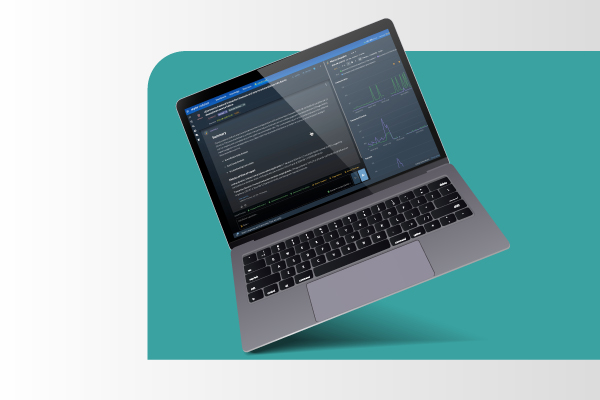
ScienceLogic delivers the Gisual integration via a pre-built Skylar One PowerPack. With a quick download and configuration, customers immediately gain access to Gisual’s AI power insights.
If this approach feels familiar to customers, there’s good reason. Skylar One Studio lets organizations build their own PowerPacks—reusable components that capture integrations, operational logic, or external data sources. The same framework that makes Gisual’s power intelligence instantly useful is available to anyone who wants to extend the platform.
Powerful Partnership in Practice
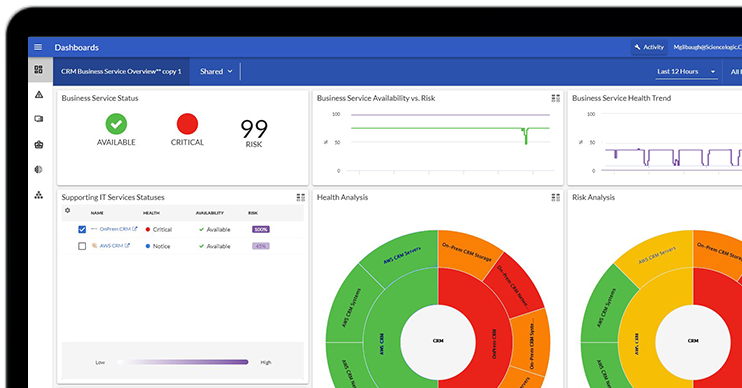
When Gisual’s power intelligence flows into Skylar One, operations can stop guessing. When a site drops offline, the platform doesn’t speculate or wait for confirmation; it knows whether power is present and drives response accordingly. Correlation, triage, and automation operate on trusted information instead of assumption. The platform suppresses distracting alert noise from the rest of the stack when action would be futile, delivers tickets already enriched with outage and restoration context, automatically closes incidents, and restarts services when power returns without manual intervention.
The impact is quick and clear. Teams reduce resolution times, eliminate unnecessary escalations, and dispatch decisions shift from reflexive to deliberate. Teams identify grid-level events accurately instead of misreading them as equipment failures, and automation behaves as expected and at scale. For leadership, this means fewer surprises and more predictable outcomes.
The Stack Now Includes the Grid
The ScienceLogic–Gisual partnership is about more than outage detection and power intelligence. It marks a shift in how observability works when digital systems depend on physical reality. Gisual makes the grid visible. ScienceLogic turns that visibility into operational intelligence.
When the lights blink in an AI-powered world, guessing isn’t an option. The stack now includes the grid — and operations finally have the insight to respond with certainty.