Misunderstanding Autonomy Starts with Misunderstanding Complexity
Many organizations approach Autonomous IT with the assumption that adding more tools, more data, or more automation will eventually produce self-governing operations. This assumption creates the illusion of progress. Complexity does not resolve itself when new systems are layered on top of existing ones. In most environments, each new tool adds another interpretation of the truth, which compounds the cognitive load on teams and forces more reconciliation, not less.
Autonomy requires clarity, not accumulation. If the environment is not understood at a foundational level, automation will accelerate disorder rather than reduce it. Many organizations believe autonomy emerges from volume. In reality, autonomy is the product of understanding. Autonomous IT isn’t a tool category. It’s a new operating model where systems don’t just execute tasks, they continuously maintain intent, negotiate tradeoffs, and prove outcomes.
Automation Without Context Creates Faster Mistakes, Not Better Outcomes
Broad automation is frequently mistaken for a direct path to autonomy. Automation is valuable, but only when it operates with awareness of the environment it affects. Many organizations automate repetitive tasks without establishing the reasoning required to make those tasks safe and adaptable. As conditions change, these automated processes continue to execute based on outdated or incomplete logic.
Teams often discover that increasing automation increases operational risk. Dashboards may report successful task execution, yet the environment becomes more fragile. This disconnect exists because automated actions are not informed by contextual understanding. Autonomy cannot emerge from workflows that do not recognize why the action matters or whether it remains appropriate. When context is missing, automation becomes speed without accuracy. Intent is central. Systems need to understand what the business is optimizing for (availability, cost, performance, security) and adapt actions as those priorities shifts.
Dashboards Do Not Deliver Autonomy, Even When They Deliver More Data
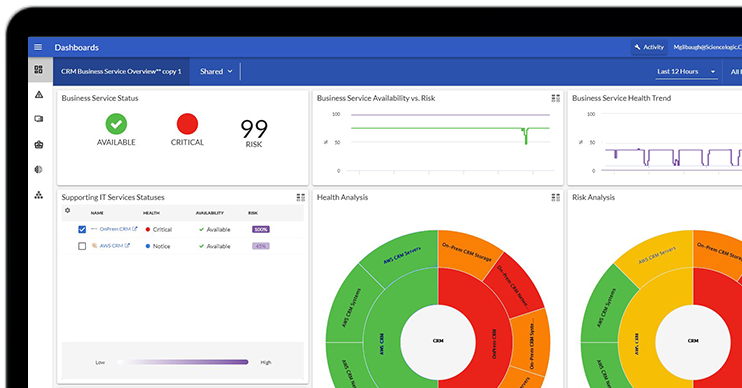
Another common misconception is that dashboards represent progress toward autonomy. Dashboards centralize data, but they do not interpret it. They often surface symptoms without identifying causes and present information without evaluating its significance. Teams rely on dashboards to stay informed, yet the work of understanding still falls on humans.
As environments evolve, dashboards often become broader, not deeper. They display more metrics and alerts, but rarely provide the reasoning teams need to decide with confidence. Organizations mistake visibility for maturity, however visibility without interpretation can reinforce reactive operations. Autonomy begins when systems can articulate meaning, not just display status.
Reasoning-Based and Verifiable AI Corrects the Trajectory
Real progress begins when AI can evaluate conditions, connect signals, and explain why a recommendation or action should occur. Reasoning provides the structure that automation lacks and the context dashboards cannot supply. It allows the system to justify decisions, make them verifiable, adapt to change, and prioritize based on impact rather than volume.
When AI can reason, teams do not have to decode telemetry or adjudicate conflicting tool outputs. They can understand the operational landscape through guided insight. This reduces manual interpretation, decreases risk, and creates a predictable path toward autonomy. Reasoning is the capability that shifts organizations from reactive workflows to intelligent operations.
Why Explainability Must Come Before Autonomy
Explainability sits at the center of the shift many organizations are trying to achieve. Leaders will not adopt autonomous processes unless they can validate how decisions are made. This validation requires transparency: what signals mattered, what policy constrained the action, what alternatives were rejected, and how confidence was assessed. That’s how autonomy becomes governable. Without it, AI introduces uncertainty instead of reducing it.
Explainability transforms AI from an opaque engine into a trusted collaborator. When teams can see how conclusions are reached, they can apply governance, evaluate potential risks, and align decisions with operational priorities. This builds confidence across the organization and creates conditions where autonomous behavior can scale safely. Explainability is not an enhancement to autonomy. It is the prerequisite.
How the ScienceLogic Platform Addresses the Misconceptions
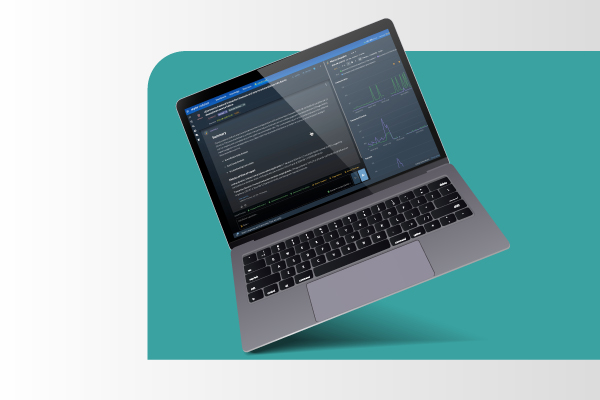
The ScienceLogic AI Platform reflects a core belief that autonomy grows out of clarity, context, and informed action. It provides the fidelity, modeling, and reasoning required to understand the environment at a level that supports confident decision-making. Skylar Advisor elevates that capability by serving as the guidance layer, translating signals into clear recommendations supported by transparent rationale.
By giving teams the ability to see not just what is happening but why it is happening and what to do next, Advisor fills the gap that automation and dashboards cannot. It establishes the operational understanding needed for autonomy to be safe, predictable, and aligned with business outcomes.
A More Realistic Path Forward
Organizations do not need to overhaul their entire technology stack to move toward autonomy. They need to replace assumptions with strategy. Progress begins when teams reduce ambiguity in their environment, adopt reasoning-based AI that can clarify decisions, and introduce automation that operates with contextual awareness.
This path is achievable and repeatable. It gives teams control over their progression rather than relying on large, disruptive shifts. By correcting the misconceptions about what autonomy requires, organizations can adopt a model that evolves naturally as their confidence increases.
Autonomous IT becomes attainable not when systems act independently, but when they act intelligently and with intent. The difference is reasoning. The opportunity is available now for organizations that choose clarity over accumulation and strategy over assumption.
To see how reasoning-based AI supports safer, clearer, and more practical progress toward autonomy, explore how Skylar Advisor brings context and explainability into everyday operations.