AI can make recommendations faster. The lasting advantage comes from whether every recommendation, action, and outcome helps the organization make a better decision next time.
Most enterprise IT teams are not short on experience. They have years of incidents, remediations, escalations, change reviews, service degradations, and post-incident lessons behind them. The problem is that much of that experience does not systematically improve the next response. It lives across tickets, runbooks, chat threads, dashboards, documentation, and the memories of the people involved.
Some of it is captured. Less of it is connected. Even less of it becomes part of how the organization operates when similar conditions appear again.
That is the missed opportunity. Every incident teaches the organization something about how its environment behaves under stress. Every remediation reveals which actions worked, which created risk, and which should not be repeated. Every service-impact assessment shows how technical dependencies connect to business outcomes. If that learning remains scattered, the organization keeps generating experience without turning it into advantage.
As AI becomes more embedded in operations, this gap becomes more urgent. A model can analyze current conditions, but it cannot automatically benefit from everything an organization has learned unless that knowledge is connected to the environment and available in context. The organizations that move fastest will not simply be the ones with more AI-generated guidance. They will be the ones whose systems learn from real operational outcomes and use that learning to improve future decisions.
Generic AI Is Not Enough
Many enterprise AI conversations still focus on model capability: how well the model reasons, how quickly it produces an answer, or how accurately it identifies a pattern. Those capabilities matter, but they are becoming easier for competitors to access. Over time, model sophistication alone will be difficult to sustain as a unique advantage.
Enterprise operations require something more specific. A recommendation is only useful if it reflects how a particular organization operates: its service architecture, dependency relationships, change processes, governance model, risk tolerance, customer commitments, and business priorities. Two enterprises can experience similar technical symptoms and still need very different responses because their environments, policies, and consequences are different.
That is why customer-specific operational learning matters. AI becomes more valuable when it can reason across the organization’s own operational context, including historical incidents, successful remediations, failed actions, known dependencies, and validated outcomes. The intelligence may be broadly available. The operational experience is not.
Learning Requires Outcomes
For AI-driven operations to improve over time, organizations need more than historical data. They need to know what happened after a recommendation or action was taken. Did the remediation resolve the incident? Did it create a downstream issue? Did the same condition recur? Did the action reduce service impact, shorten escalation, or improve confidence in the next response?
That is where many organizations fall short. They capture the fact that an incident closed, but not always the reasoning, action path, or outcome quality that would make the next decision better. A ticket may show that service was restored, but not whether the recommendation was correct, whether the action was safe, or whether the organization should respond the same way again.
Without that feedback loop, AI may help teams move faster without helping the organization get smarter. A mature learning workflow connects recommendations, decisions, actions, and verified outcomes so teams can use evidence from one incident to inform the next. Capturing that evidence is the prerequisite for improving future guidance, not proof that an AI system is already learning automatically.
Why This Creates Durable Advantage
Learning systems create advantage when organizations use evidence from their own environments to improve operational decisions. Each incident can add context. Each validated remediation can strengthen confidence. Each change can refine the understanding of dependencies and risk. Each documented outcome can help teams distinguish actions that consistently work from those that only appeared correct at the time.
That advantage compounds. A team that learns from every incident does not start from scratch when similar symptoms appear again. A new engineer benefits from decisions made before they joined. A distributed operations team can apply lessons from one region to another. AI-driven guidance becomes more useful because it is informed by operational history, not just current telemetry.
This is difficult for competitors to replicate. A vendor can offer similar AI capabilities. A competitor can adopt similar models. But they cannot copy years of customer-specific operational context, historical decisions, service dependencies, governance practices, and validated outcomes. That is where lasting advantage begins to form.
How ScienceLogic Helps Operational Learning Compound
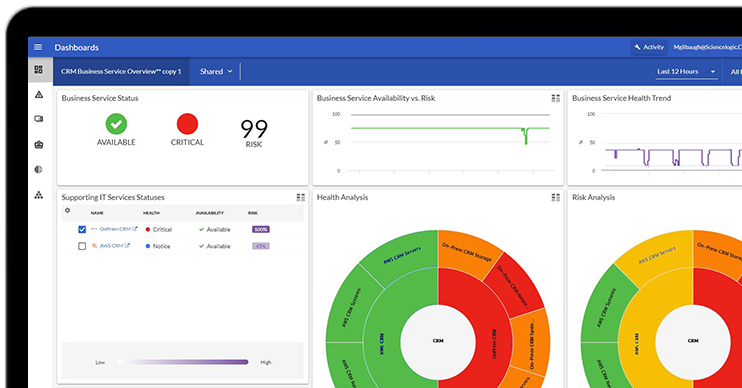
ScienceLogic connects observability, AI-driven guidance, and intelligent automation across its product portfolio, helping teams work from operational context rather than isolated signals. Skylar One provides visibility into infrastructure, applications, services, events, and topology, creating a stronger foundation for informed operational decisions. Connecting that context with decisions and their outcomes is an important step toward more mature learning workflows.
Skylar AI builds on operational context to provide proactive, evidence-backed guidance informed by available telemetry and relevant knowledge. Its role is to help teams understand what matters and evaluate recommended next to that every validated outcome automatically retrains today. Skylar Automation addresses the execution side by helping teams orchestrate operational actions and workflows. Together, they support a path from insight to governed action, while systematic outcome capture and closed-loop learning remain important areas of evolution.
ScienceLogic helps organizations connect operational visibility, actionable guidance, and automation while building toward more comprehensive feedback loops. As teams establish ways to capture decisions and verify outcomes, they can reduce repeat work, improve confidence, and create a stronger foundation for future learning across complex hybrid environments. For examples of how organizations are using ScienceLogic to improve operational resilience and outcomes, explore our customer success stories.
From Learning Systems to Learning Workflows
As AI becomes more common, organizations need to evaluate more than the intelligence of the model. They need to ask whether every operational experience makes the next decision better. If incidents close without captured reasoning, if remediations are not validated, and if recommendations are not connected to outcomes, the organization may be using AI without building advantage.
The organizations that act now will be better prepared for the next stage of AI-driven operations. They will have systems that do more than analyze current conditions. They will have systems that learn from their own operating history and apply that learning when it matters.
That is where durable advantage comes from. Not intelligence alone, but intelligence that becomes more operationally informed with every incident, decision, action, and outcome.
The next question is where that learning actually happens. It happens, or fails to happen, inside the workflows where operational decisions are made.