Organizations rarely lose operational knowledge because people leave. They lose it because what they know gradually drifts away from the environment it was meant to describe.
There is a particular silence that falls over an incident bridge when someone says, “This feels familiar.” Everyone senses the organization has solved this problem before. The challenge is that the engineer who solved it has moved to another team or left the company, the runbook describing the fix reflects an architecture that has since changed, and the ticket documenting the resolution is buried beneath years of subsequent incidents that no one has time to search at two in the morning. So the team reconstructs the answer from scratch, often arriving at the same conclusion the organization reached months earlier and paying for the same lesson twice. The repeated incident is simply the visible symptom of a deeper and largely invisible problem: the organization already possessed the knowledge but could no longer retrieve it in a form that remained relevant.
The conventional diagnosis blames employee turnover and prescribes better documentation. Capture what people know before they leave, the reasoning goes, and institutional knowledge will be preserved. That diagnosis misses the problem in two important ways, which explains why even organizations with extensive documentation continue to forget. First, operational knowledge is not primarily explicit. Much of it exists as judgment: knowing which alert truly matters, which dependency is quietly fragile, which remediation is safe during business hours, and which is not. Judgment resists documentation because the context that gives it value is difficult to capture. A runbook can record the steps. It rarely captures the reasoning that tells an experienced engineer when those steps no longer apply.
The second mistake is more subtle and ultimately more significant. Operational knowledge decays even when no one leaves because the environment it describes never stands still. Runbooks have a half-life. So do architecture diagrams, known-error records, and the mental models engineers build through experience. Applications evolve, dependencies shift, services are introduced and retired, and every change quietly invalidates part of what the organization once knew. Documentation that was carefully preserved may now describe an environment that no longer exists. No one discovers that gap until the next incident, when yesterday’s guidance leads today’s responders in the wrong direction. Preservation, when treated as archiving, does not solve this problem. It simply creates a growing library of information that was accurate at a particular moment in time.
Why Operational Knowledge Fades
This reframes the problem entirely. Preserving operational knowledge is not fundamentally a storage problem. It is a currency problem. Knowledge remains valuable only while it stays connected to the reality it describes. The moment it is separated into a static artifact, it begins drifting away from a continuously changing environment, and that drift happens silently. There is no alert when a runbook becomes outdated. An organization can possess extensive documentation and still, in every operational sense that matters, have forgotten because what it stored is no longer connected to the environment it was meant to explain. Knowledge endures only when it remains anchored to the live state of the systems it describes, evolving as those systems evolve.
Turnover, then, is only one way that connection is broken, and not even the most common. Distributed operations break it through distance. Within a co-located team, tacit knowledge spreads naturally as engineers observe one another, participate in incident bridges, and learn how experienced colleagues reason under pressure. A follow-the-sun operating model interrupts that process. What one region learns while resolving an incident overnight often fails to reach the next region beginning its workday because there is no shared mechanism for carrying that lesson forward. Reorganizations break the connection through structure. Mergers break it through scale. Different circumstances, but the same underlying failure: the knowledge never existed independently of the people who happened to hold it.
This is why preserving institutional knowledge becomes a defining challenge as AI-driven operations mature rather than simply an extension of traditional knowledge management. As AI assumes more of the operational analysis, the competitive advantage shifts. Success depends less on whether an organization can analyze a situation and more on whether that analysis incorporates everything the organization has already learned from similar situations. An AI system that reasons impressively but approaches every incident as if it were new is, operationally, simply a faster version of the team that forgets. It will rediscover root causes that were resolved months earlier, confidently and efficiently. Intelligence is ultimately constrained by the quality of the memory it can access. As reasoning becomes increasingly abundant, institutional memory becomes the limiting factor. The more autonomous systems an organization deploys, the more significant this challenge becomes because every system operating without shared operational memory multiplies rediscovery instead of eliminating it.
Preserving Knowledge in a Changing Environment
Preserving operational knowledge therefore demands something more rigorous than capturing it. It requires keeping what the organization has learned continuously connected to a model of the environment that evolves as the environment evolves. Past incident resolutions, known service vulnerabilities, operational procedures, and organizational experience remain tied to the current topology, active dependencies, and live operational state. Knowledge maintained this way provides two advantages that archived information never can. It remains accurate because it is continuously validated against current reality rather than frozen at the moment it was recorded. And it becomes available in context, surfacing automatically when similar conditions arise instead of waiting for someone to remember where it was documented. Preservation, in this sense, is not the act of storing knowledge. It is the continuous process of keeping organizational knowledge grounded in the environment it is meant to serve.
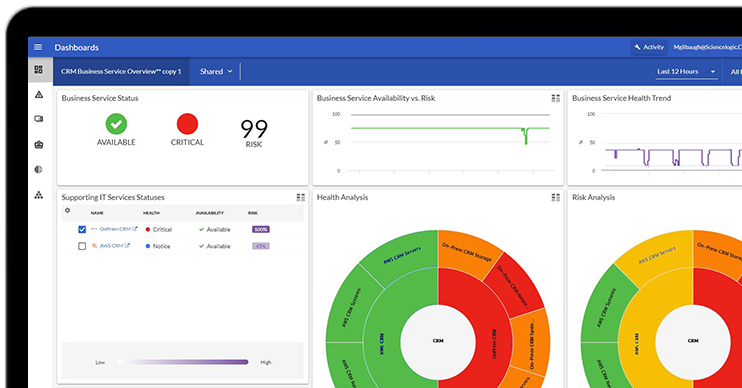
This is the approach embodied by the ScienceLogic AI Platform, which treats institutional knowledge as a living operational model rather than a static repository. Its continuously maintained operational understanding brings together telemetry, topology, service relationships, historical incidents, operational workflows, and organizational knowledge to provide shared operational context that evolves alongside the environment itself. Because that representation is continuously maintained rather than captured at a single point in time, the knowledge associated with it—including prior failures, successful resolutions, service dependencies, and operational guidance—remains connected to the current state of the environment instead of gradually drifting away from it. Skylar Advisor reasons across the customer’s operational context, including observability data and customer knowledge sources, allowing recommendations to incorporate what the organization has already learned when familiar conditions emerge, supported by the evidence behind those recommendations. The operational knowledge that once depended on the experience of a handful of senior engineers becomes available wherever decisions are made, and it remains part of the organization even as people and roles change.
The result is that organizations retain something far more valuable than documentation when teams evolve. A new engineer joining a distributed operations team does not inherit a collection of runbooks that may or may not still reflect reality. They inherit guidance grounded in the environment as it exists today, informed by incidents they never experienced firsthand. A region beginning its workday benefits from what another region learned overnight. Institutional knowledge no longer depends on who happens to be available, employed, or participating in the incident.
From Institutional Memory to Operational Learning
The broader principle extends beyond any single platform. As AI becomes more capable, the organizations that create lasting advantage will not simply be those that analyze problems faster. They will be the ones whose decisions are continuously informed by everything the organization has already learned, with that knowledge remaining connected to an environment that never stops changing. Operational knowledge survives only when it stays attached to the living operational reality it describes. Once that connection is broken, knowledge begins to decay, regardless of how thoroughly it has been documented. Preserving knowledge and keeping it current are ultimately the same challenge.
Keeping operational knowledge accurate over time is a significant achievement in itself. But it also creates a larger opportunity. Knowledge that remains connected to a changing environment does more than persist. It accumulates. Each incident strengthens the organization’s understanding. Each resolution improves future recommendations. Each operational decision contributes to a growing body of knowledge that becomes more valuable over time. When preservation becomes continuous learning, operational understanding stops being something an organization simply maintains and becomes something it steadily compounds. That is where durable operational advantage begins and where the next article in this series turns.