Gartner IT Symposium/Xpo is always a standout experience for ScienceLogic, and this year’s event in Orlando was no exception. The event brought together seasoned IT leaders, analysts, and solution providers, creating a dynamic hub for meaningful conversations, hands-on demos, and translating future-driven insights into action. More than being honored to attend, ScienceLogic thrives on engaging with IT leaders on the show floor, in sessions, and throughout the event. This years’ experience was especially impactful after Gartner recognized ScienceLogic as a Visionary in the 2025 Gartner® Magic Quadrant™ for Observability Platforms.
Meaningful Conversations on the Show Floor
The Orlando show floor buzzed with energy, and our booth sat at the center of it all. We connected with infrastructure and operations leaders, Managed Service Providers (MSPs), and other IT professionals to discuss the pressing challenges of observability and automation. The recurring themes were clear: complexity, cost pressure, AI’s growing influence, and the need to shift from reactive to proactive IT models.
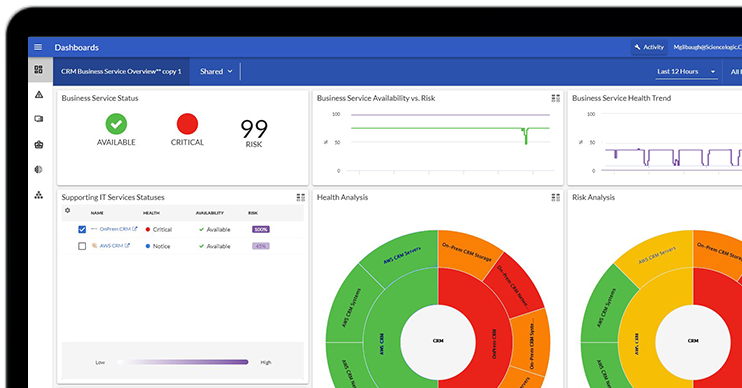
Many of these conversations unfolded during live demos of the ScienceLogic AI Platform, where attendees witnessed how autonomous IT (discrete actions) and Autonomic IT (operational frameworks) work together to create self-managing, self-healing environments. Interest centered around how ScienceLogic empowers organizations to monitor sprawling IT estates and transform data into actionable insight aligned to business priorities. Increasingly, the word that came up in these conversations was “trust.” As organizations move toward agentic AI, trust is earned when systems observe, reason, and act with transparency.
This year more than ever, one message resonated: organizations are moving beyond “just monitoring” and adopting mature observability platforms that enable smarter operations.
Recognition in the Magic Quadrant
We were thrilled to be recognized in the 2025 Gartner® Magic Quadrant™ for Observability Platforms. Recognition like this matters it signals to IT leaders that our vision and execution align with market needs and that we deliver meaningful, advanced observability capabilities. It reinforces our core message: moving from tool-based observability to outcome-based Autonomic IT operations.
It also reminds us that trust isn’t built through marketing it’s engineered. Platforms that explain their reasoning, show confidence levels, offer verification, and invite human validation will be the ones that gain lasting adoption.
Great Sessions, Actionable Takeaways
The conference sessions were rich with forward-looking ideas that reinforced our message and echoed the show floor conversations:
- Opening Keynote: “Walking the Golden Path to Value”
Urged CIOs to balance AI readiness with human readiness.
- “Top Strategic Technology Trends for 2026”
Introduced three emerging operations roles:
- The Architect (AI platforms/infrastructure),
- The Synthesist (AI applications/architectures),
- The Vanguard (security, trust, governance).
- “Top Strategic Predictions for 2026 and Beyond”
Daryl Plummer highlighted bold trends: multi-agent AI workflows, regionalized AI platforms, and growing AI agent roles in business operations.
- “Executive AI Governance Playbook” & “Top Strategic Trends in Software Engineering”
Emphasized AI-native software development, governance, and the risk of treating AI as a “wizard.”
- “Emerging Technology Vision 2026”
Discussed autonomous business models—self-learning, self-improving systems—forecasting that by 2035, at least one industry leader will be a fully autonomous business.
- “4 Generative AI Skills to Master in 2025”
Focused on workforce readiness:
- Chance spotting
- Tech fluency
- Effective prompting
- Continuous evaluation of GenAI output
A standout theme across sessions: Trust is the real breakthrough. The “Architecture of Accountability” framework emphasized that systems must make their reasoning visible and keep humans in the loop for validation and control. The most reliable agentic systems are those that make accountability observable.
Overarching Conference Themes
Throughout the event, several consistent messages emerged:
- AI readiness + human readiness
Success requires balancing technological capability with people, process, and organizational evolution.
- From observability to autonomy
Organizations are evolving from dashboards and alerts to intelligent systems that act in alignment with business goals.
- Governance, trust, and responsible innovation
As AI becomes embedded in operations, transparency, ethics, and security must remain front and center.
- Ecosystems and agentic systems
The future lies in platforms, autonomous workflows, multi-agent systems, and programmable business models—not just standalone tools.
- Skills and engineering transformation
Success depends on how teams evolve their practices, adopt AI-native design, and build the skills of the future.
What We’re Taking Home
The conversations and insights we gathered at the Symposium validated what we see every day: organizations are progressing from monitoring infrastructure to managing outcomes. The future of IT operations depends on systems that learn, reason, and act responsibly to deliver business value. That future isn’t about replacing people it’s about AI that works with people: explainable, transparent, and accountable.
I like to think of it as to keep IT out of sight but always in mind. When IT runs seamlessly and intelligently, it stops being a source of friction and becomes a strategic enabler of performance. The next era of innovation will be led by organizations that prioritize collaboration over replacement, transparency over autonomy, and accountability over AI theater.
- Skylar One delivers unified observability across hybrid, multi-vendor estates and connects performance to business outcomes.
- Skylar AI powers intelligent correlation and root cause analysis to reduce noise, speed resolution, and predict incidents before they happen—all while making AI reasoning visible and trustworthy.
- Skylar Automation drives closed-loop remediation, freeing IT teams from repetitive tasks and enabling a focus on innovation.
Together, these capabilities move organizations closer to Autonomic IT—self-managing, self-healing, and self-optimizing operations aligned to strategic goals. As Gartner emphasized, trust will determine the speed and scale of agentic transformation. At ScienceLogic, we’re engineering that trust from the ground up.
Our biggest takeaway:
The market is ready for intelligent, agentic platforms that turn data into action and operations into outcomes. ScienceLogic is leading that shift—from observability to autonomy.
Thank You
Thank you to everyone who connected with us in Orlando. The conversations about AI, observability, automation, and the future of IT operations were both insightful and energizing.
We look forward to continuing the dialogue and helping more organizations advance their Autonomic IT journey.
If you’re in Las Vegas next week for Gartner IOCS, we’d love to talk! Stop by Booth 343, or book a dedicated 1-1.